
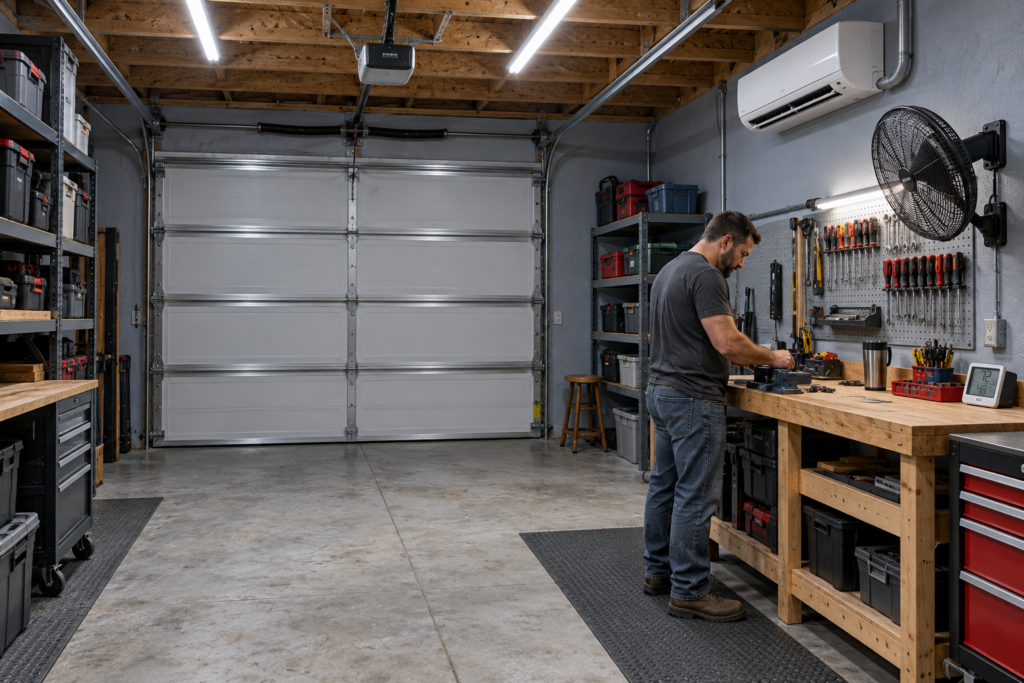
Learning how to cool a garage with no windows starts with understanding where the heat enters—and how you can move it back outside. A fully closed-in garage can get miserable fast, especially when the roof, door, and concrete have been soaking up heat all day. The important thing to understand is that cooling an enclosed garage is not just about moving air around. To lower the air temperature, the heat inside needs a route out of the building.
This guide walks you through practical ways to cool a windowless garage, from low-cost comfort improvements to installed air-conditioning options. It’s intended for anyone using a garage as a workshop, home gym, hobby space, or storage area—not as a place to run a vehicle. The right answer depends on your climate, how often you use the space, and whether you can create a safe path to the outdoors.
Quick Overview
A fan can make a hot garage feel more tolerable while you work, but it does not remove heat from the room. The U.S. Department of Energy notes that fans create a wind-chill effect by circulating air around occupants; they are a comfort tool rather than a replacement for air conditioning. That distinction matters in a sealed garage, where hot air has nowhere useful to go.
For occasional use, blocking heat at the garage door and ceiling and using a sturdy fan may be enough. If you need dependable cooling for regular work, workouts, electronics, or temperature-sensitive gear, you will need mechanical cooling that rejects heat outdoors. That usually means a properly vented portable AC or a ductless mini-split system.
What You’ll Need
Your exact setup will determine what belongs on this list, but most windowless-garage cooling plans call for some combination of:
- A thermometer and humidity gauge
- A sturdy circulation fan, floor fan, or wall-mounted fan
- Weatherstripping for the garage door and exterior door, if gaps are present
- Garage-door insulation or ceiling or roof insulation, where appropriate
- A portable air conditioner with its manufacturer-approved exhaust components, if you have a suitable exterior vent route
- A ductless mini-split system and professional installation, if you want a permanent solution
- A safe, code-compliant electrical outlet or circuit appropriate for the equipment
- A plan for where warm exhaust air, condensate, or outdoor equipment will go
Before You Begin
Start by figuring out what kind of heat problem you have. Visit the garage during the hottest part of the day and note the temperature, humidity, sun exposure, and where the heat seems strongest. A garage that feels like an oven by midafternoon often has a roof, door, or sun-facing wall doing most of the work. A garage that stays sticky and uncomfortable after sunset may have a humidity problem as well.
Also decide what “cool enough” means for your use. If you spend an hour at a workbench a few weekends a month, a fan and better insulation may offer sensible value. If you use the garage daily as a gym, office, workshop, or hobby room, temporary fixes can become a long-running annoyance. That is when a more permanent cooling setup starts making sense.
Never idle a vehicle in an attached garage, even when the garage door is open. In a detached garage, fully open the door before starting a vehicle and move it outdoors promptly. Do not use generators, grills, camp stoves, or other fuel-burning equipment inside the garage.
Before sealing the garage or installing equipment that moves air outdoors, check for a gas water heater, furnace, or other fuel-burning appliance. Exhaust equipment can change air pressure and potentially interfere with proper venting. If combustion equipment is present, have an HVAC professional evaluate the plan before proceeding. Also keep cooling equipment away from flammable liquids, heavy dust, spray finishes, and water sources.
Step-by-Step Instructions
Step 1: Identify Where the Heat Is Coming From
Check the biggest heat-gain surfaces first: the garage door, ceiling, roofline, and walls that receive direct sun. Stand near each surface during the hottest part of the day. If one wall or the door feels noticeably hotter than the surrounding air, that is a clue worth following.
A bare metal garage door can act like a giant heat radiator pointed directly at your work area. Likewise, an uninsulated ceiling below a hot attic or roof can keep feeding heat into the room long after the sun has moved on. Cooling equipment will have a harder job if the building itself is still pouring heat into the space.
Step 2: Decide Whether You Need Comfort Airflow or Actual Cooling
If the garage is occupied only occasionally, begin with a good fan. Position it so air moves across the area where you stand, sit, or work—not straight into a wall of storage bins. Air movement helps sweat evaporate and makes your body feel cooler even when the room temperature has not changed.
The Department of Energy explains that fans improve comfort through this wind-chill effect, but they do not replace mechanical cooling in a hot, enclosed space. DOE’s home cooling guidance is especially relevant here: without a way to exhaust heat, a fan is basically giving the hot air a more energetic personality.
If the garage needs to be reliably cooler rather than merely less unpleasant, move on to insulation, air sealing, and an air-conditioning option that vents heat outside.
Step 3: Reduce Heat Gain Before Buying Bigger Cooling Equipment
Seal obvious gaps around exterior doors and the garage door, especially if you can see daylight around the edges or feel hot outdoor air pushing in. Weatherstripping will not turn a garage into a walk-in cooler, but it can prevent your cooling equipment from fighting a steady leak.
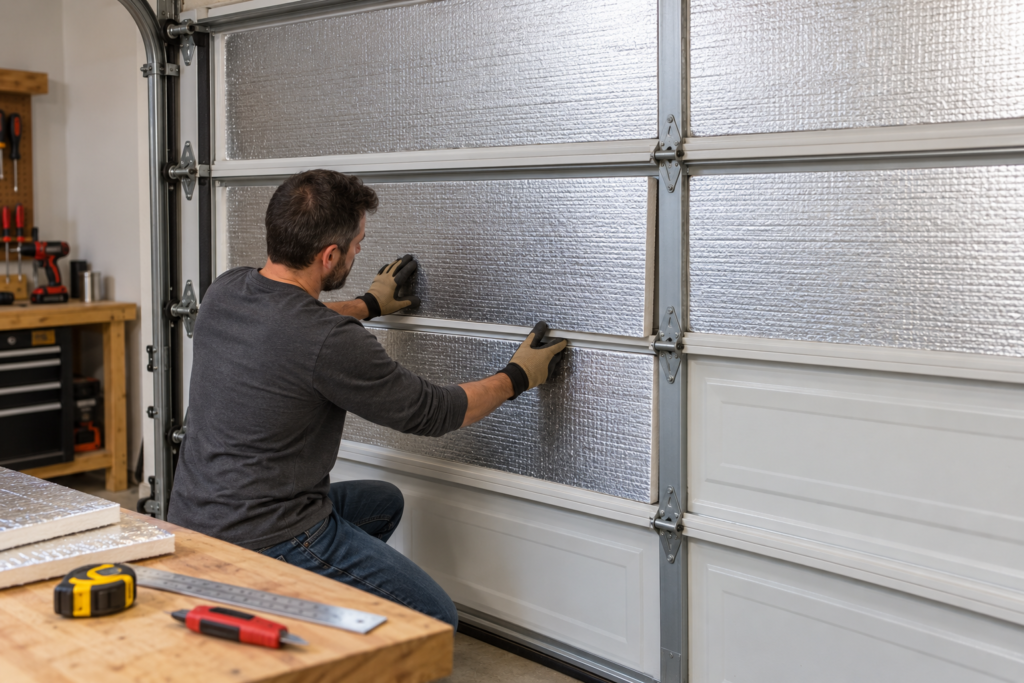
Next, consider insulation where it will matter most. Insulating the garage door can help if the door gets afternoon sun. Insulation above the ceiling or at the roofline can matter even more in garages beneath a hot roof. Focus on the surfaces actually driving the heat problem rather than covering every wall just because the insulation came in a multipack.
This is also the time to rethink storage. Keep boxes, lawn equipment, and shelves away from the fan’s intake and discharge path. A garage can have plenty of square footage and still have the airflow of a packed closet.
Step 4: Use Fans Strategically
For a workbench, gym corner, or hobby table, aim the fan across your body rather than directly at your face from two feet away. A little distance helps create broader air movement instead of a wind tunnel that sends paperwork, sawdust, or paint fumes on a field trip.
A wall-mounted or pedestal fan can be useful when floor space is limited. A large floor fan may make more sense if you need to move air across a wider area. For frequent use, favor sturdy construction, a stable base or secure mounting method, accessible controls, and a grille that is easy to clean. Garage dust has a way of finding every moving part eventually.
Keep expectations realistic. Fans offer good value for personal comfort and short tasks. They are not the answer if you need to protect temperature-sensitive materials or make the entire space reliably cooler.
Step 5: Consider an Evaporative Cooler Only in a Dry Climate
Evaporative coolers, sometimes called swamp coolers, cool air by evaporating water into it. That can work well in dry climates, but it is not a universal fix. In humid areas, adding more moisture to the air can make a garage feel clammy rather than comfortable.
The Department of Energy notes that evaporative cooling is best suited to arid conditions and that these units add humidity. Mineral buildup can also reduce airflow through the pads over time, so water quality and regular maintenance matter. DOE’s guidance on evaporative cooling equipment is a useful reminder that this option needs water, airflow, and upkeep—not blind faith in a box fan with a water tank.
An evaporative cooler also needs a place for air to move. Running one in a fully sealed garage is usually a poor plan because the added moisture has nowhere to go.
Step 6: Choose a Portable AC Only If You Can Vent It Outdoors
A portable air conditioner can be practical for occasional or seasonal use, but “portable” does not mean “vent-free.” In cooling mode, the unit pulls heat from the garage air and must send that heat outdoors through its exhaust hose.
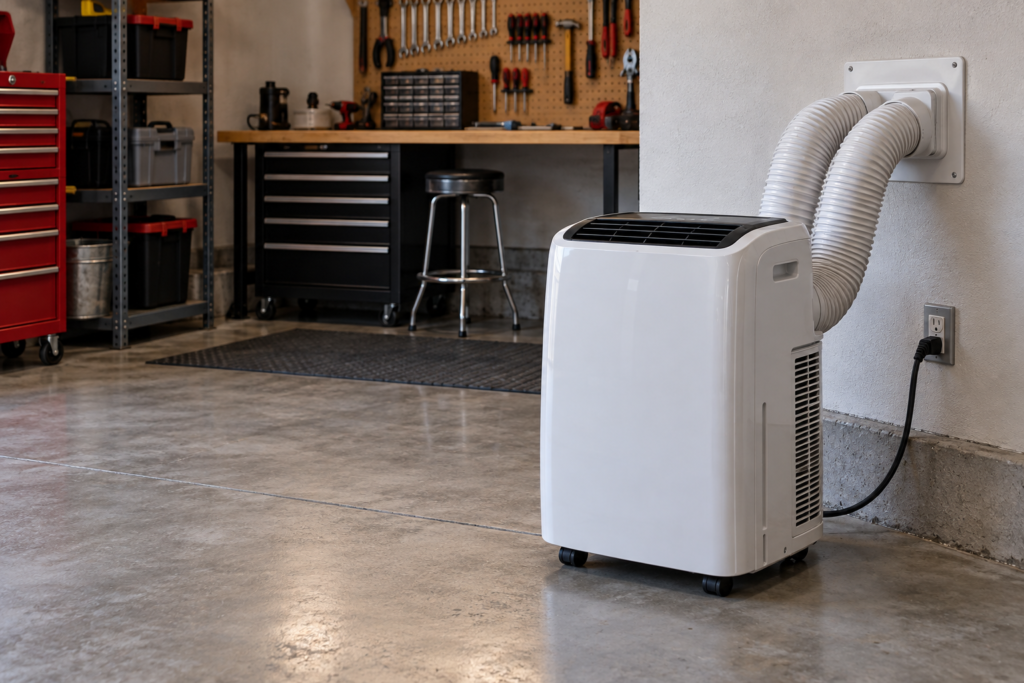
No window is not automatically a deal breaker. Some portable AC models support through-wall exhaust setups when the manufacturer provides the correct adapter and installation hardware. Check your specific unit’s manual before cutting, drilling, or improvising anything. For example, a current Midea portable-AC manual specifies exhaust-hose use in cooling mode and documents wall installation only for compatible models with the supplied wall components.
Keep the exhaust run as short and direct as the manufacturer allows. Avoid crushing the hose, adding unnecessary length, making sharp bends, or blocking the outdoor discharge. Never dump the hot exhaust into the attic, a crawlspace, or another closed part of the garage. That is not cooling; it is moving the problem a few feet away and hoping it gets bored.
Step 7: Consider a Ductless Mini-Split for Frequent Use
If the garage is part of your daily routine, a ductless mini-split is usually the more durable long-term approach. The indoor unit delivers cooled air inside, while the outdoor unit rejects heat outdoors. That basic arrangement solves the problem a fan cannot: it gives the heat somewhere to go.
A mini-split is not the budget choice, and it is not usually a casual weekend purchase. It requires a suitable location for the outdoor equipment, a route through the wall for the connecting lines, condensate planning, and appropriate electrical work. The upside is quieter, more consistent cooling without a portable machine occupying floor space or a hose snaking across the room like it owns the place.
Before committing, consider whether the garage is insulated and how often you will use the system. Installing permanent cooling in a garage that gains heat through every surface can leave you paying for comfort that quickly escapes.
Step 8: Recheck Temperature, Humidity, and Real-World Comfort
After making changes, use your thermometer and humidity gauge during the same hot conditions that made the garage uncomfortable in the first place. Check the space near your work area, not only beside the cooling equipment.
Pay attention to how the room feels after an hour, not just the first five minutes. Is the fan reaching you? Is the portable AC exhausting properly? Does humidity climb when you use an evaporative cooler? Are hot spots still coming from the door or ceiling?
This check helps you avoid buying more equipment before you know what the first improvement accomplished.
Helpful Tips
- Turn on the fan when you enter and position it to blow across your work area. Running a fan in an empty garage does not provide a useful cooling benefit.
- Keep the garage door closed while using air conditioning. Opening it repeatedly invites a large amount of outdoor heat into the space.
- Shade the exterior side of a sun-facing garage door or wall when practical. Stopping sunlight before it hits the building is often more useful than trying to overpower that heat afterward.
- Clean fan grilles, air intakes, and portable-AC filters according to the manufacturer’s instructions. Dust buildup is not exciting, but neither is weak airflow.
- Put portable cooling equipment where it will not block walking paths, tool access, or emergency exits.
- If the garage doubles as storage, avoid treating the entire space like a finished living room unless you use the whole space that way. Cooling one active work zone can be more sensible.
Common Mistakes to Avoid
- Buying a portable AC without an exhaust plan. A portable unit needs to reject hot air outdoors in cooling mode. No window does not remove that requirement.
- Expecting a fan to lower room temperature. Fans can make you feel cooler, but they do not remove heat from an enclosed garage.
- Using an evaporative cooler in humid weather. It adds moisture, which can make an already humid garage less comfortable.
- Venting hot AC exhaust into the attic or garage. The heat needs to leave the building, not take a detour.
- Ignoring insulation and air leaks. Cooling equipment works harder when the garage door, ceiling, and gaps keep adding heat.
- Blocking airflow with storage. A fan or AC unit cannot do much if its intake or discharge is buried behind boxes, bikes, and forgotten paint cans.
- Choosing permanent cooling for occasional use without doing the math. A solid fan and heat-control measures may be enough for infrequent tasks.
Final Thoughts
The best way to cool a garage with no windows is to separate personal comfort from actual cooling. Fans help your body feel cooler. Insulation and air sealing reduce the heat entering the space. Air conditioning lowers the air temperature only when it can move the collected heat outdoors.
Start with the simplest fix that matches how you use the space. If the garage is an occasional work zone, do not overbuild the solution. If it is part of your everyday routine, a properly vented portable AC or ductless mini-split can make the difference between a usable room and a summer storage locker with tools in it.
Frequently Asked Questions
Can I use a portable air conditioner in a garage with no windows?
Yes, but only if the unit’s hot-air exhaust can be routed outdoors through a manufacturer-approved opening, such as a compatible through-wall installation. A portable AC cannot cool properly if it vents its exhaust back into the garage.
Will insulating my garage make it cool without air conditioning?
Insulation can reduce incoming heat and help the garage maintain a more stable temperature, but it does not actively cool the air. It works best alongside a fan for personal comfort or air conditioning for actual temperature reduction.
Is a swamp cooler good for a windowless garage?
It can be useful in a dry climate if the garage has a way for air and added moisture to move out. In humid climates or tightly sealed garages, it can make the space feel damp and uncomfortable.
What is the best cooling option for a garage used every day?
A properly sized ductless mini-split is often the most practical long-term option for frequent use because it cools the space while rejecting heat outdoors. It costs more and requires installation, but it avoids the floor-space and exhaust-hose limitations of a portable unit.
Have the system sized for the garage’s insulation, air leakage, sun exposure, ceiling height, and local climate rather than choosing it from square footage alone.