
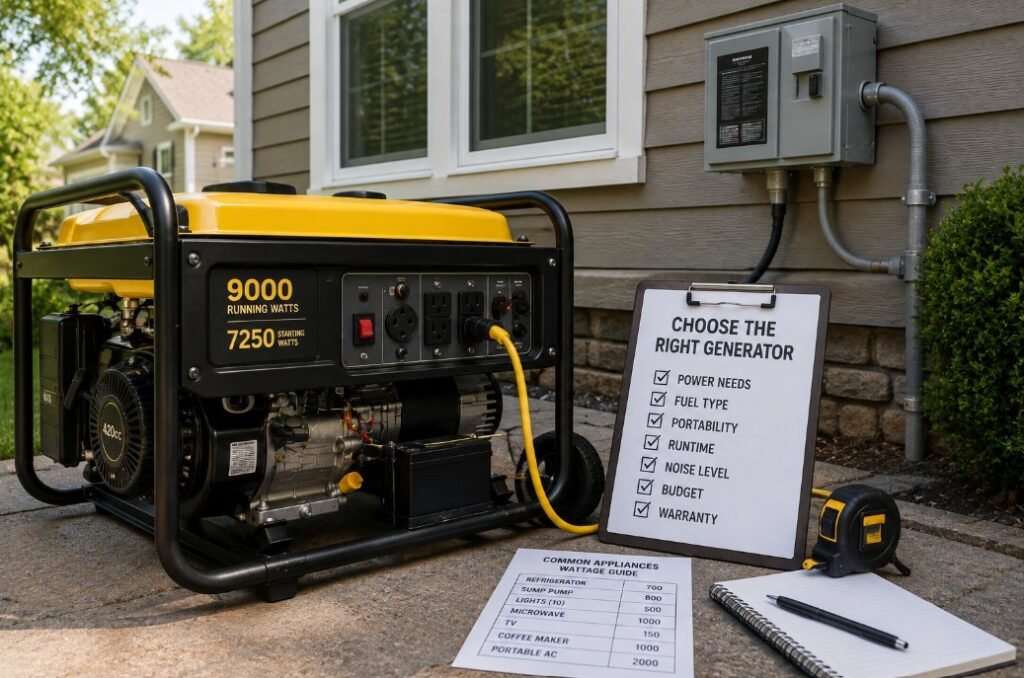
Generators provide a reliable backup power source during outages, storms, or emergencies. Choosing a generator for your home means understanding your power needs, budget, and the features that will make operation and maintenance manageable. A well-selected generator can keep essential appliances running and provide peace of mind when the grid goes down.
With many options available, from portable units to standby systems, it’s important to focus on practical factors like capacity, fuel type, and ease of use. This guide aims to break down the key considerations and features to help homeowners make an informed choice that fits their specific requirements.
Affiliate disclosure: Some links in this article are affiliate links. If you make a purchase through an affiliate link, I may earn a commission at no additional cost to you. As an Amazon Associate I earn from qualifying purchases.
Quick Facts
- Best For: Backup power during outages, emergency preparedness, and powering essential home appliances
- Budget: Typically ranges from a few hundred to several thousand dollars, depending on capacity and features
- Expected Lifespan: Generally 10 to 30 years with proper maintenance
- Maintenance Level: Moderate; includes regular oil changes, fuel system checks, and periodic load testing
Buying Guide Overview
Choosing a generator for home use is about more than just picking the most powerful or cheapest model. It’s about matching the generator’s capabilities to your household’s essential power needs and usage patterns. This decision impacts your comfort, safety, and ability to maintain normal routines during power interruptions.
This guide helps homeowners evaluate critical factors such as power output, fuel options, portability, and maintenance demands. Understanding these elements ensures that the generator you choose performs reliably when you need it most and aligns with your long-term ownership preferences.
Westinghouse 12500 Watt Dual Fuel Home Backup Portable Generator
What to Consider Before Buying
Intended Use
Determine whether the generator will serve as a full-house backup or just power select appliances. Whole-home generators typically require professional installation and higher capacity, while portable models can handle smaller loads like refrigerators, lights, and medical devices.
Required Capacity
Calculate the required wattage by adding the starting and running wattages of the appliances you want to power. This helps avoid undersizing, which causes overloads, or oversizing, which wastes money and fuel.
Fuel Type
Common fuel options include gasoline, propane, diesel, and natural gas. Each has advantages related to availability, storage, runtime, and emissions. Consider what fuel you can store safely and access easily during outages.
Portability
Decide whether the generator needs to be easily moved or will stay in one location. Portable units often have wheels and handles and are suited for occasional use, while standby generators are permanently installed and automatically start during a power outage.
Budget
Balance the upfront cost against long-term expenses such as fuel, maintenance, and possible installation fees. Higher-capacity or standby generators typically cost more but offer greater convenience and power security.
Maintenance Requirements
Some generators require more frequent oil changes, filter replacements, and inspections. If regular upkeep is a concern, look for models with easy access for service or consider professional maintenance plans.
Noise Level
Generators vary in noise output, which can affect comfort and relations with neighbors. If noise is a priority, look for models with noise-reducing features or those labeled “quiet” or “inverter” generators.
DuroMax 13,000-Watt Tri Fuel Gas Propane Natural Gas Portable Generator
Important Features
Automatic Transfer Switch
An automatic transfer switch (ATS) seamlessly switches your home’s power source from the grid to the generator during an outage. This feature avoids manual setup and ensures continuous power without interruption.
Inverter Technology
Inverter generators produce cleaner, more stable electricity that’s safe for sensitive electronics like laptops and smartphones. They also tend to be quieter and more fuel-efficient, making them ideal for smaller, portable applications.
Fuel Gauge and Low-Oil Shutdown
Built-in fuel gauges help you monitor fuel levels easily, preventing unexpected shutdowns. Low-oil shutdown protects the engine by turning off the generator before oil levels become dangerously low, extending engine life.
Multiple Outlets and Connectivity
Generators with a variety of outlets, including standard, twist-lock, and USB ports, offer flexibility to power different devices simultaneously. Some models also support parallel connection, allowing two units to run together for additional power.
Run Time
Run time indicates how long the generator can operate on a full tank of fuel at a specified load. Longer run times reduce the need for frequent refueling during extended outages.
Electric Start
Electric start models simplify operation by allowing you to start the generator with the push of a button or key, instead of manual recoil starting. This feature enhances convenience, especially in cold or emergency conditions.
Common Tradeoffs
Portability vs. Power
Portable generators are easier to move and store but generally have lower power output. Larger, stationary generators provide more power but require professional installation and remain fixed in place.
Fuel Type vs. Availability
Gasoline is widely available but less stable for long-term storage. Propane and natural gas burn cleaner and store longer but may require special hookups or tanks. Diesel offers good fuel efficiency but can be noisier and more expensive.
Noise Level vs. Cost
Quieter generators often come with inverter technology or sound-dampening enclosures, which increase cost. Budget models may be louder but offer basic functionality for essential backup power.
Upfront Cost vs. Long-Term Expense
Cheaper generators may have higher maintenance costs and shorter lifespans, while more expensive models often include extended warranties and require less frequent servicing.
ECOFLOW DELTA 3 Max Portable Power Station
Who This Is Best For
Homeowners in Storm-Prone Areas
Those facing frequent power outages due to storms benefit from standby generators with automatic transfer switches. These systems provide seamless power restoration without manual intervention.
Occasional Users and Campers
Portable inverter generators suit homeowners who need power for occasional outages or outdoor activities. Their quiet operation and fuel efficiency make them versatile for a range of uses.
Budget-Conscious Buyers
For those prioritizing cost, basic portable generators with manual start and moderate power capacity offer essential backup power without overspending. They require more hands-on operation and maintenance.
Tech-Savvy Users with Sensitive Electronics
Inverter generators with clean power output are best for users running computers, medical devices, or home offices, protecting expensive and sensitive equipment from power surges.
Homeowners Wanting Minimal Maintenance
Standby generators with professional installation and service contracts suit those preferring a hands-off approach. These units often include automatic features that reduce routine upkeep.
Final Thoughts
Selecting a generator for home use involves weighing your household’s power needs, budget, and willingness to handle maintenance. Practical factors such as capacity, fuel type, and portability play major roles in selecting a unit that delivers reliable backup power without unnecessary complexity or cost.
By understanding the key features and tradeoffs, homeowners can make confident choices that ensure their essential appliances stay running during outages. With the right generator in place, power interruptions become manageable events rather than major disruptions.
Frequently Asked Questions
How do I calculate the size generator I need for my home?
Add up the starting and running wattage of all appliances you want to power simultaneously. Choose a generator with a capacity that meets or exceeds this total.
Can I install a standby generator myself?
Standby generators require professional installation due to electrical and gas connections. Portable generators can be set up by homeowners with basic instructions.
What is the difference between inverter and conventional generators?
Inverter generators produce stable, clean power safe for sensitive electronics and are typically quieter and more fuel-efficient than conventional models.
How often should I perform maintenance on my generator?
Routine maintenance, including oil changes and filter replacements, is generally recommended every 50 to 100 hours of operation or annually, whichever comes first.
Is it safe to run a generator indoors?
No, generators produce carbon monoxide, a deadly gas. Always operate generators outdoors in well-ventilated areas away from windows and doors.