
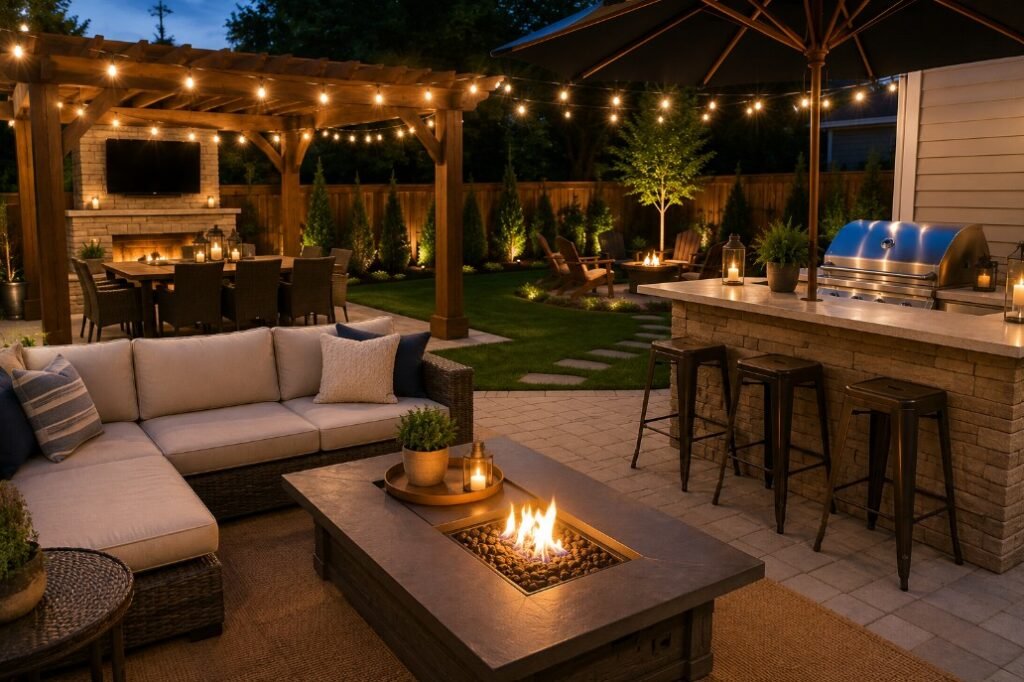
Designing a backyard built for entertaining is a rewarding project that transforms an ordinary outdoor space into a social hub. Whether hosting family barbecues, casual hangouts, or lively parties, a well-planned backyard makes gathering together enjoyable and comfortable. This practical guide walks through creating a versatile, inviting backyard setup that meets the needs of both hosts and guests.
A backyard designed for entertaining combines functionality, comfort, and style. It should accommodate seating, dining, cooking, and recreational activities while blending seamlessly with the existing landscape. With clear steps and realistic advice, this guide helps turn any outdoor area into a go-to spot for entertaining year-round.
Quick Facts
- Difficulty: Moderate – requires basic DIY skills and some planning
- Time: Several weekends depending on project scope
- Cost: Moderate to high – varies with materials and features chosen
- Best For: Homeowners looking to enhance outdoor living spaces for social gatherings
Project Overview
This project involves designing and creating a backyard layout tailored specifically for entertaining guests. It includes planning zones for seating, dining, cooking, and recreation, along with considerations for lighting, shade, and landscaping. The end result is a cohesive outdoor area that comfortably and efficiently supports a range of social activities.
A backyard designed for entertaining not only increases usable living space but also adds value and enjoyment to your home. By thoughtfully arranging key elements and selecting durable, attractive materials, homeowners can host memorable gatherings while making maintenance manageable. The versatile design ensures the space works well for both small family evenings and larger celebrations.
Tools Needed
- Measuring Tape: To accurately measure the backyard and plan layout dimensions.
- Shovel: For digging holes when installing posts, planting, or preparing ground.
- Level: Ensures flat, even surfaces for patios, decks, and furniture placement.
- Power Drill and Screwdriver: Useful for assembling structures and securing fixtures.
- Wheelbarrow: Helps transport soil, mulch, and materials across the yard.
- Saw: For cutting lumber or decking materials to size.
- Hammer: Basic tool for nailing and general construction needs.
- Gardening Gloves: Protect hands when working with soil and plants.
Materials Needed
- Paving Stones or Decking Boards: Provide a stable, attractive surface for seating and dining areas.
- Outdoor Furniture: Comfortable tables, chairs, and lounges designed for weather resistance.
- Shade Structures (Pergola, Umbrella): Offer relief from sun and light rain, enhancing comfort.
- Lighting Fixtures: String lights, lanterns, or solar lights to extend usability into the evening.
- Fire Pit or Outdoor Heater: Creates a cozy gathering spot and extends seasonal use.
- Plants and Landscaping Materials: Add natural beauty and privacy, defining space boundaries.
- Outdoor Cooking Equipment (Grill, Smoker): Essential for food preparation during gatherings.
Before You Begin
Planning is critical before starting any backyard entertaining design. Begin by measuring the entire outdoor area and noting existing features like trees, fences, and slopes. Sketch a rough layout to visualize where seating, cooking, and activity zones will fit comfortably without overcrowding.
Prepare your workspace by clearing debris and leveling the ground where necessary. Consider local building codes and permits if installing permanent structures. Safety is paramount—wear protective gear when using tools and be mindful of underground utilities when digging.
How to Complete the Project
Step 1: Define Zones for Different Activities
Start by designating specific areas for seating, dining, cooking, and recreation. This zoning helps organize the space and ensures each function has enough room. For example, place the dining table near the cooking area for convenience, and lounge seating in a quieter corner for relaxation.
Step 2: Install Patio or Decking Surfaces
Lay down a solid surface, such as paving stones or decking boards, to create a foundation for furniture. This step involves preparing the ground, ensuring proper drainage, and securing materials evenly. A level surface prevents furniture wobble and improves safety.
Step 3: Choose and Arrange Outdoor Furniture
Select durable furniture designed for outdoor use and arrange it to promote conversation and easy movement. Use a mix of seating options such as benches, chairs, and sofas to accommodate different group sizes. Leave enough clearance for guests to walk comfortably.
Step 4: Add Shade Structures
Install a pergola, umbrellas, or retractable awnings to protect guests from sun and light rain. Consider permanent options if the budget allows or portable solutions for flexibility. Shade increases comfort and encourages longer gatherings during warm weather.
Step 5: Set Up Outdoor Cooking Facilities
Position a grill, smoker, or outdoor kitchen near the dining area but with sufficient ventilation. Make sure there is enough counter space for food prep and storage. Maintaining a safe distance from seating and shade structures is essential to prevent accidents.
Step 6: Incorporate Lighting Solutions
Install string lights, lanterns, or solar-powered fixtures to illuminate pathways and activity zones. Layer lighting to create ambiance and provide enough brightness for cooking and dining. Timers or sensors add convenience and energy efficiency.
Step 7: Add a Fire Pit or Outdoor Heater
Include a fire pit or heater for warmth and a focal point during cooler evenings. Position it centrally within the seating area but maintain a safe distance from flammable materials. Ensure proper ventilation and follow local safety regulations.
Step 8: Landscape Around the Entertaining Areas
Plant shrubs, flowers, and trees to enhance privacy, define boundaries, and add visual appeal. Use low-maintenance plants suited to your climate. Mulch and edging help keep beds tidy and reduce upkeep.
Step 9: Accessorize with Functional Decor
Add cushions, outdoor rugs, and side tables to increase comfort and functionality. Select weather-resistant materials and colors that complement the overall design. Accessories personalize the space and make it inviting.
Step 10: Test and Adjust the Layout
Host a small gathering or simulate traffic flow to identify any issues with spacing or comfort. Make adjustments to furniture placement, lighting, and shade as needed. A flexible layout allows for tweaks based on real use.
Common Mistakes to Avoid
- Failing to plan adequate space between zones, resulting in cramped or awkward flow.
- Ignoring local building codes or failing to obtain necessary permits for structures.
- Overlooking proper drainage, which can cause pooling water and damaged surfaces.
- Choosing furniture that is not weather-resistant, leading to premature wear.
- Installing poor lighting that is either too dim or creates glare and shadows.
- Neglecting safety clearances around cooking and fire features.
Final Thoughts
Creating a backyard built for entertaining requires careful planning and thoughtful execution, but the payoff is a welcoming, functional outdoor space tailored to social gatherings. By focusing on distinct activity zones, durable materials, and comfort-enhancing features like shade and lighting, homeowners can enjoy seamless entertaining in their own backyard.
With attention to detail and a step-by-step approach, anyone can transform their outdoor space into a versatile venue for everything from casual family dinners to lively parties. The key is to keep the design practical and adaptable, ensuring the backyard remains a favored spot for friends and family to come together year-round.
Frequently Asked Questions
What is the best surface for an outdoor entertaining area?
Paving stones and composite decking are popular because they are durable, low maintenance, and provide a stable surface for furniture and foot traffic.
How much space do I need for a backyard entertaining area?
A comfortable entertaining space should allow at least 10-12 feet for dining and seating zones, plus additional room for cooking and walking paths.
Can I add a fire pit if I have a small backyard?
Yes, but choose a compact, contained fire pit and position it safely with adequate clearance from structures and plants.
What lighting options are best for outdoor entertaining?
String lights and solar-powered lanterns create a warm ambiance, while LED fixtures provide brighter task lighting for cooking and dining areas.