
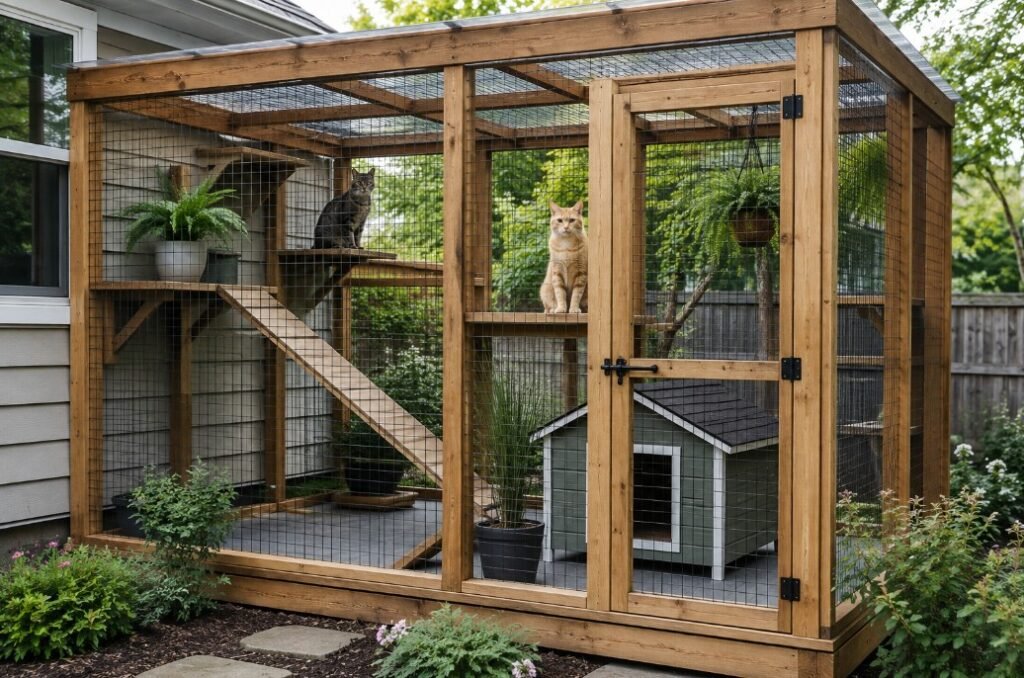
Building a DIY catio is a fantastic way to give your feline friends a safe outdoor space where they can enjoy fresh air and sunshine without the risks associated with free roaming. Creating a secure enclosure tailored to your cat’s needs helps prevent accidents, protects local wildlife, and keeps your pet from wandering off. This guide offers a practical, step-by-step approach to constructing a catio that balances safety, comfort, and fun.
Whether you have a small balcony, a backyard, or just a patch of garden, a catio can be customized to fit your space and your cat’s personality. With clear instructions and realistic planning, even beginners can build a sturdy, attractive enclosure that both you and your pets will appreciate. The following sections break down the project—from tools and materials to common pitfalls—making it easy to get started with confidence.
Quick Facts
- Difficulty: Moderate – requires basic carpentry skills and tools
- Time: Approximately 1–2 weekends depending on size and complexity
- Cost: $150–$500 depending on materials and size
- Best For: Cat owners wanting a safe, enclosed outdoor space for their pets
Project Overview
A DIY catio is essentially a fenced or enclosed outdoor area designed specifically for cats. It allows them to experience the outdoors safely, preventing them from escaping or encountering hazards like traffic, predators, or poisonous plants. The finished catio can range from a simple balcony add-on to a full backyard enclosure, depending on the available space and your preferences.
The key benefit of a catio is peace of mind. Cats get the enrichment of fresh air, sunshine, and stimulation from birds and bugs, while owners avoid the stress of worrying about their pets roaming freely. This project emphasizes durable materials and secure construction to keep your cat safe and comfortable for years to come.
Tools Needed
- Measuring Tape: To take accurate measurements of your space and materials.
- Power Drill: For drilling holes and driving screws efficiently.
- Saw (Hand or Power): To cut wood or PVC to required lengths.
- Screwdriver: For manual screw adjustments and small fittings.
- Hammer: Useful for securing nails or tapping parts into place.
- Level: Ensures your structure is even and stable.
- Safety Glasses: Protect eyes during cutting and drilling operations.
- Work Gloves: Shield hands from splinters and sharp edges.
Materials Needed
- Wood or PVC Pipes: Serve as the frame for the catio; wood is sturdy and easy to work with, PVC is lightweight and weather-resistant.
- Wire Mesh or Hardware Cloth: Provides a secure barrier that keeps cats in and pests or predators out; choose a mesh size small enough to prevent escapes.
- Screws and Nails: Fasten frame and mesh securely.
- Hinges and Latches: For doors or access panels, allowing easy cleaning and entry.
- Weatherproof Paint or Sealant: Protects wood from moisture and extends the life of the catio.
- Outdoor Flooring Material (Optional): Such as artificial turf, outdoor rugs, or wooden decking for comfort and cleanliness.
- Shade Cloth or Plants (Optional): Adds shade and comfort inside the catio, helping to keep cats cool.
Before You Begin
Start by assessing the available outdoor space where you want to build the catio. Measure the area carefully, including height and width, and consider where you will attach the catio if it’s going to be connected to a window, balcony, or wall. A clear workspace nearby will make building easier and safer. Make sure all your tools and materials are organized before starting.
Safety is important throughout this project. Wear protective gear like gloves and safety glasses, especially when cutting or drilling. If you’re working on a balcony or an elevated area, ensure there are no height-related hazards. Planning for ventilation and shade will keep the catio comfortable for your pets.
How to Complete the Project
Step 1: Design Your Catio Layout
Sketch a simple plan of your catio, including dimensions and door placement. Decide if it will be freestanding or attached to your house or balcony. Consider your cat’s activity level and preferences—some cats like perches or tunnels, so include these features if desired.
Step 2: Gather and Prepare Materials
Cut your wood or PVC frame pieces according to your measurements. Pre-drill holes in the wood to prevent splitting. If using wood, sand rough edges to avoid splinters. Lay out your wire mesh and cut to size, allowing a few extra inches for secure attachment.
Step 3: Build the Frame
Assemble the frame by connecting the cut pieces using screws or PVC connectors. Use a level to check that all corners are square and the frame is stable. Reinforce the corners with extra brackets or braces, if needed, to ensure sturdiness.
Step 4: Attach the Wire Mesh
Securely fasten the wire mesh to the frame using screws and washers or staples. Make sure the mesh is taut to avoid sagging or gaps where a cat could escape. Pay special attention to corners and edges, trimming any sharp wire ends.
Step 5: Construct and Install Doors
Build a simple door frame that fits one side of the catio. Attach the wire mesh as before. Install hinges on one side and a latch or lock on the other. Test the door for smooth opening and secure closure.
Step 6: Apply Weatherproofing
Paint or seal all wooden parts with a weatherproof product to protect against rain and sun damage. Allow adequate drying time before moving forward. This step is crucial for durability, especially if your catio is exposed to the elements.
Step 7: Add Flooring and Accessories
Lay down outdoor flooring such as artificial turf or decking to create a comfortable surface. Add perches, ramps, or hideouts as desired. Position a shade cloth or plant some greenery nearby to provide shelter from direct sun.
Step 8: Final Safety Check
Inspect the entire catio for loose screws, sharp edges, or gaps in the mesh. Make sure the door latch is secure and that the structure is firmly anchored if freestanding. Double-check that there are no escape routes or hazards inside.
Step 9: Introduce Your Cat
Allow your cat to explore the new space gradually. Supervise initial outings until your pet becomes comfortable. Observe how they interact with the enclosure and adjust any features if needed for safety or enrichment.
Common Mistakes to Avoid
- Using mesh with holes too large, allowing cats to squeeze through or get stuck.
- Skipping weatherproofing, which can lead to wood rot and unstable structures.
- Not securing the frame firmly, causing the catio to wobble or collapse.
- Ignoring sharp wire ends that can injure curious cats.
- Overlooking door latches or locks that can be easily opened by your pet.
- Failing to provide shade or shelter, making the catio uncomfortable in hot weather.
Final Thoughts
Building a DIY catio offers a rewarding way to enrich your cat’s life while ensuring their safety outdoors. With careful planning, proper materials, and attention to detail, this project produces a secure, enjoyable space that benefits both pets and owners. The hands-on process also strengthens your connection to your home and your cats by customizing a space just for them.
By following clear steps and avoiding common pitfalls, even those new to DIY can create a catio that stands the test of time. This structure not only protects your pets but also gives them the freedom to experience the outdoors in a controlled environment. Taking the time to build a catio is an investment in your pet’s happiness and your peace of mind.
Frequently Asked Questions
How large should a catio be?
The size depends on available space and your cat’s activity level, but aim for at least 6 feet long by 4 feet wide to allow comfortable movement.
Can a catio be freestanding, or does it need to attach to a building?
Both options work; freestanding catios require sturdy anchoring, while attached catios often use windows or balconies for support.
What type of mesh is safest for a catio?
Hardware cloth with 1/2-inch or smaller openings is ideal because it prevents escapes and keeps predators out.
How do I ensure my catio is weather-resistant?
Use treated wood or PVC, apply weatherproof paint or sealant, and include shade or shelter inside the catio to protect against sun and rain.