
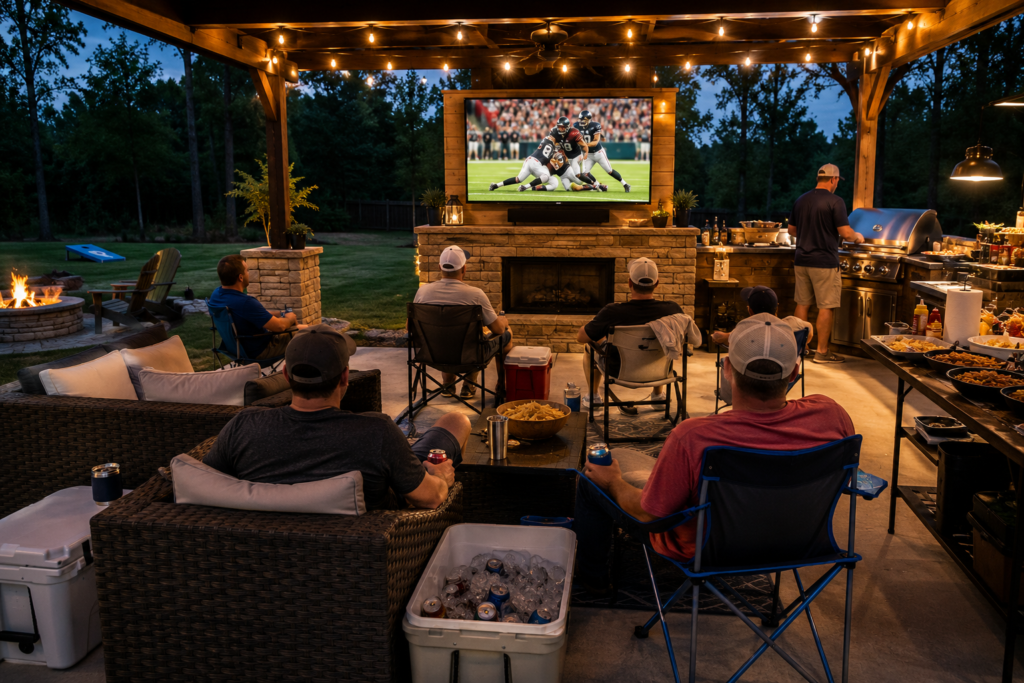
A good outdoor sports watch party feels easy because the work happens before the first guest arrives. This checklist helps you set up a backyard, driveway, patio, campground, or other outdoor viewing space that stays comfortable when the sun shifts, the game gets loud, and somebody inevitably asks where the napkins went.
Use it for a big game, race, fight night, tournament match, or casual afternoon with friends. Scale it to your space and guest list. The goal isn’t to build a stadium in the yard; it’s to give everyone a decent view, a place to sit, and food that doesn’t turn into a full-contact sport.
Affiliate disclosure: Some links in this article are affiliate links. If you make a purchase through an affiliate link, I may earn a commission at no additional cost to you. As an Amazon Associate I earn from qualifying purchases.
Start With the Viewing Area
- Choose the screen location before moving furniture. Find a spot where the screen is visible from most seats and protected from direct sun as much as possible. Glare can turn a great TV or projector into an expensive black rectangle, especially during daytime games.
- Check the viewing angle from the actual seating area. Sit where your guests will sit and look at the screen position. A screen mounted too high, too low, or off to one side will have people twisting their necks by halftime.
- Keep the screen away from obvious hazards. Avoid placing electronics where they can be hit by a tossed football, cornhole bag, swinging cooler lid, or kid chasing a dog. Outdoor gatherings have momentum. Plan accordingly.
- Consider daylight before choosing a projector. Projectors can work well after sunset or in heavily shaded areas, but bright daylight is tougher. If the event starts in the afternoon, a TV in a shaded location may be the more reliable option.
- Make a backup plan for the game feed. Know which device, app, antenna, cable connection, or streaming service you’ll use before guests arrive. Sign in, update apps if needed, and confirm that the event is available through your service. Nothing kills the pregame mood like an unexpected password reset.
- Test the setup at the same time of day as the event, if possible. Sun angle, shadows, neighborhood noise, and Wi-Fi performance can all change between morning and game time. A quick trial run reveals problems while they’re still easy to fix.

Build Comfortable Seating for Every Kind of Guest
- Count seats, then add a few flexible options. Patio chairs, camp chairs, benches, outdoor cushions, and folding chairs can all work. Not everyone needs a throne, but nobody should have to balance a paper plate while sitting on a landscaping rock.
- Arrange seating in rows or small clusters based on your screen size. For a larger group, stagger chairs so people aren’t staring directly at the back of someone else’s head. Keep a clear path through the seating area so late arrivals can grab a spot without performing an awkward sidestep routine.
- Set aside a few seats with back support. Some guests will be happy in a folding camp chair all afternoon. Others will appreciate a sturdier patio chair, bench, or cushioned seat. A mix makes the setup more welcoming without turning your yard into an outdoor furniture showroom.
- Leave room for standing spectators. During a close game, people tend to gather near the screen, grill, or cooler. Give them a place to stand without blocking the view of seated guests.
- Use side tables, crates, or other sturdy surfaces for drinks. Every seat doesn’t need its own table, but enough landing spots will prevent cups and plates from ending up on the ground, armrests, and whatever flat part of the grill looks least greasy.
- Plan for kids and pets if they’ll be around. Give them a separate activity area away from cords, food tables, and the main screen. They don’t need to be banished to the far corner of the property. The goal is simply to keep a flying foam ball from becoming part of the broadcast.
Create Shade and Weather Coverage
- Map the sun before setting up. A shaded patio at noon may be fully exposed later in the afternoon. Pay attention to where the sun will be during the event, not just where it is when you start arranging chairs.
- Use the shade you already have first. Trees, covered patios, pergolas, awnings, and porch roofs often make the best base for an outdoor watch party. Add umbrellas or pop-up canopies where coverage falls short.
- Secure umbrellas and canopies according to their instructions. Outdoor shade gear can catch the wind fast. Use the recommended weights, anchors, or tie-downs for your setup, and don’t leave lightweight gear to negotiate with a gusty afternoon on its own.
- Keep the screen and electronics dry. A covered seating area helps, but the TV, projector, power connections, and streaming device need their own protection plan. Move electronics indoors or under suitable cover if rain becomes likely.
- Prepare for temperature changes. A game that begins in warm weather can get cool after sunset. Keep a small stack of blankets, outdoor throws, or extra layers available when conditions call for them. Guests will remember the game either way, but they’ll remember shivering through overtime too.
- Have a weather pivot ready. Decide ahead of time whether the party can move indoors, shift under a covered area, or be postponed if conditions turn rough. It’s easier to make that call early than after the chips are out and the extension cords are wet.
Set Up Sound That People Can Actually Hear
- Test audio from the farthest seats. The sound may seem fine next to the TV, then disappear completely near the food table. Walk around while the game audio is playing and make adjustments before guests arrive.
- Use an outdoor-rated speaker or sound system if you have one. A TV’s built-in speakers may be enough for a small, quiet patio, but open spaces swallow sound. A separate speaker can make commentary and crowd noise easier to hear without pushing the volume into neighbor-annoyance territory.
- Place speakers near the viewing area, not across the whole yard. Directing sound toward guests helps keep the volume under control. It also reduces the urge to turn it up as people spread out.
- Keep audio equipment protected and stable. Set speakers on solid surfaces, keep cords out of walking paths, and place electronics away from drink stations. One spilled soda shouldn’t be able to bench your sound system for the season.
- Think about neighborhood noise. Big plays deserve some cheering. Continuous booming audio late into the evening may be a different story. Keep the setting and local rules in mind, especially if homes are close together.
- Turn on captions if the group is chatty. Captions can help guests follow key calls, interviews, and commentary when conversation picks up. For a social watch party, that small adjustment can make the broadcast more accessible without requiring stadium-level volume.
Handle Power, Wi-Fi, and Cable Management
- Confirm that your power source can reach safely. Use suitable outdoor-rated extension cords and equipment where needed, and follow the manufacturers’ instructions. Avoid running cords through standing water, across busy walkways, or under rugs where heat and damage can go unnoticed.
- Protect connections from moisture. Outdoor viewing setups often involve more plugs than expected: TV, speaker, streaming device, Wi-Fi extender, fan, phone charger, and maybe a projector. Keep connections elevated and sheltered from spills, dew, and rain.
- Secure cords along edges whenever possible. Route them beside walls, fences, or the patio perimeter rather than through the middle of the seating area. Cord covers or temporary cable-management products can help reduce trip hazards.
- Check Wi-Fi strength where the screen will sit. Streaming may work perfectly inside and struggle ten feet farther out. Test the same device in the outdoor location, especially if multiple people will be using the network during the event.
- Reduce unnecessary bandwidth use before kickoff. Ask household members to avoid large downloads or high-demand streaming during the game if your connection is limited. Guests don’t need a buffering wheel during the final drive.
- Keep a charged phone or alternate device handy. It can help with troubleshooting, score checks, weather updates, or a backup stream if the primary setup acts up. Technology is useful right up until it decides to become a character in the story.

Plan Food and Drinks Around the Event, Not Just the Menu
- Choose food that fits your setup. Finger foods, sandwiches, grilled items, dips, tacos, and make-ahead sides all work well because they’re easy to serve and eat while watching. Save the complicated plated meal for another day unless you genuinely enjoy cooking through three quarters.
- Build a menu with a mix of hot and cold options. Hot food is great, but include items that are easy to keep properly chilled or serve straight from a cooler. This keeps everyone from crowding the grill at the same time.
- Set up food away from the screen. A separate serving station keeps traffic moving and gives seated guests a clear view. It also limits the number of people wandering in front of the TV with a loaded plate at the worst possible moment.
- Label foods with common dietary concerns in mind. Simple labels can help guests identify spicy dishes, meat-free options, major allergens, or sauces with unexpected ingredients. Nobody needs a full ingredient dossier beside the chips, but a little clarity goes a long way.
- Use coolers, ice, and covered containers as needed. Cold drinks should stay cold, and food that requires temperature control shouldn’t spend the afternoon parked in the sun. Keep lids, serving utensils, and extra ice within reach.
- Offer water in an obvious spot. Outdoor sports watch parties can involve sun, salty snacks, and a surprising amount of standing around debating coaching decisions. Make water easy to find alongside the other drinks.
- Put trash and recycling where people can see them. One clearly marked bin near the food and drink area is better than expecting guests to carry empty cans across the yard. Keep extra bags nearby for quick changes.
Make the Space Easy to Use After Dark
- Add low, practical lighting around walkways. Path lights, string lights, porch lights, or battery lanterns can help guests move safely without blasting the screen area with glare. The goal is to light the route, not recreate a parking lot.
- Keep the screen area darker than the food station and seating edges. Too much light near the TV or projector can hurt visibility. Place brighter task lighting near the grill, serving table, and restroom route instead.
- Check steps, uneven ground, and changes in elevation. Mark areas that are easy to miss after dark, especially deck steps, garden borders, hoses, or transitions from patio to lawn.
- Have a restroom plan. Make sure guests know where the restroom is and how to get there without guessing. If they need to pass through the house, clear the route and turn on enough interior lighting to make it easy.
- Keep insect control practical. Remove standing water around the gathering area if possible, cover food, and use the outdoor pest-control options you’re comfortable with. The bugs don’t care who is winning, but they do seem to show up when the wings come out.
Do a Final Walk-Through Before Guests Arrive
- Turn on the broadcast early. Confirm the picture, sound, streaming connection, remote controls, and channel access before anyone rings the doorbell. Keep spare batteries nearby if your remotes use them.
- Sit in a few different seats. Check the view from the front, back, and sides. Move chairs blocked by posts, umbrellas, speakers, or the tall friend who somehow always gets there first.
- Clear clutter from the main paths. Garden tools, toys, hoses, grill accessories, and loose cushions can all become obstacles once the group settles in. Clear walkways also make the entire setup feel more organized.
- Stock the essentials near where they’ll be used. Put napkins, utensils, bottle openers, serving tools, hand wipes, sunscreen, and a basic first-aid kit in sensible locations. This prevents you from spending the entire game making supply runs.
- Give yourself permission to keep it simple. The best outdoor sports watch party setup is one you can actually manage and enjoy. A reliable screen, comfortable seating, decent food, and good company beat an elaborate setup that leaves you troubleshooting while everyone else watches the game.
Final Thoughts
Start with the screen, shade, seating, and sound, then build the food and extras around them. If guests can see the game, hear the important moments, stay comfortable, and find a cold drink without a scavenger hunt, you’ve already won the hosting matchup.